


Key Highlights
- Ballet academies in Singapore offer structured training from beginner to advanced levels.
- Most follow recognised syllabi such as RAD or CSTD for measurable progression.
- Students can expect regular assessments, recitals, and performance opportunities.
- Training covers technique, musicality, and physical conditioning.
- Both children and adults are catered for across various class formats.
Introduction
There is a particular kind of discipline that ballet demands, and no amount of online tutorials or casual dance sessions can replicate what structured, academy-level training provides. For families and individuals exploring ballet in Singapore, understanding what a training pathway actually looks like, from the first pliés to examination-level work, makes all the difference when choosing where to begin.
Where It All Starts: Foundation and Pre-Primary Levels
Most academies structure their earliest classes around movement exploration, rhythm awareness, and basic coordination rather than strict technique. Children as young as three or four years old are introduced to ballet in Singapore through playful, music-driven sessions designed to build spatial awareness and listening skills before any formal terminology is introduced.
Pre-primary classes are not watered-down versions of ballet. They are their own carefully designed stage, one that lays the groundwork for everything a student will encounter later. The focus sits firmly on posture, footwork patterns, and the kind of body awareness that becomes instinctive with consistent practice.
The Syllabus Framework: Structure That Actually Means Something
Once students move beyond foundational levels, most reputable ballet academies in Singapore adopt a recognised international syllabus, most commonly the Royal Academy of Dance (RAD) or the Cecchetti Society grading system. These frameworks provide a clear, progressive structure that moves students through graded examinations, each building in technical complexity and physical demand.
The value of following an established syllabus lies in accountability. Students are assessed by external examiners, which means progress is measured objectively rather than anecdotally. For parents, this offers tangible evidence of their child’s development. For students, it builds confidence through demonstrated achievement.
Examinations are not compulsory at every level, but they are strongly encouraged, particularly for students who wish to pursue ballet in Singapore seriously beyond the recreational stage.
What the Training Actually Involves Week to Week
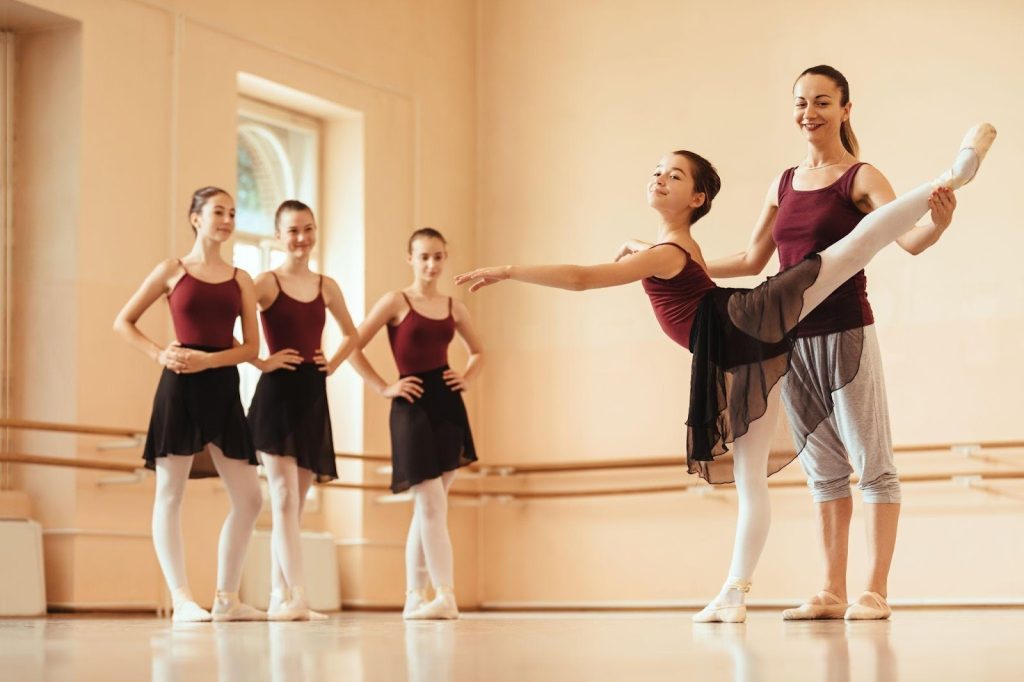
Consistent class attendance, plain and simple, is the backbone of ballet training. A student at the primary level might attend once or twice a week, while those in the intermediate grades are typically expected to train three to five times weekly. Class content shifts considerably as students progress.
Early-grade classes focus on barre work, centre practice, and the precise coordination of arms and legs. Intermediate students encounter more demanding exercises: pirouettes, allegro combinations, and longer phrase work that tests stamina as much as technique. Advanced students, meanwhile, are often working on variations from the classical repertoire alongside strength and conditioning work designed to support their physical demands.
Musicality runs through every level. Ballet is not simply physical, and teachers within a strong ballet academy in Singapore will consistently emphasise the relationship between movement and music, training students to listen and respond rather than simply execute steps on cue.
Performance Opportunities and Beyond
Annual showcases and school productions offer students the chance to apply their training in a performance context, which is genuinely irreplaceable as a learning experience. Performing teaches a student things that no classroom exercise can: how to project presence, how to maintain composure under pressure, and how to function as part of an ensemble.
Some academies also facilitate entry into external competitions and festivals, which introduce students to a broader ballet community in Singapore and provide further motivation for dedicated learners. For those with professional ambitions, guidance on auditions and further training pathways is typically available from senior faculty.
Conclusion
A ballet academy in Singapore offers far more than dance lessons. It offers a structured progression that builds discipline, artistry, and genuine technical skill over time. Whether a student begins at three or thirty, the pathway is designed to meet them where they are and challenge them to grow meaningfully.
If you are ready to take the first step, reach out to AQ Dance, a trusted name in ballet in Singapore. Find the right class for your child or yourself, because the best time to start is always now!